Start by Asking What's Actually Wrong
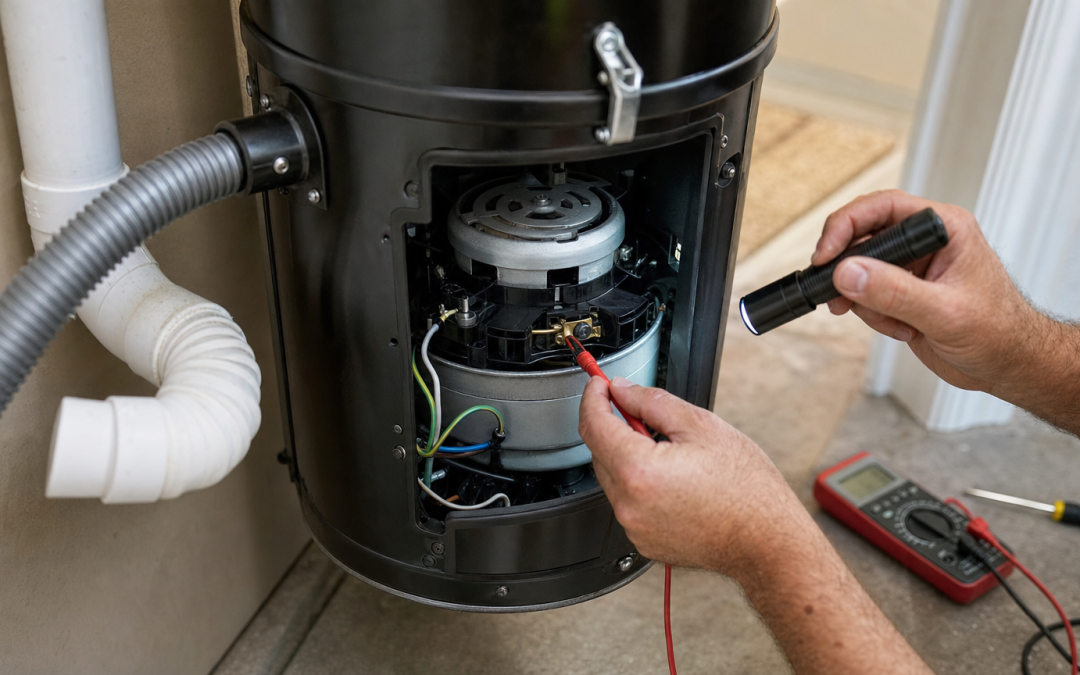
Before you agree to any repair, ask the technician to tell you what they found and why it's happening – not just hand you a price. A central vacuum problem can come from several different places: a worn motor, a blocked pipe somewhere in the wall, a hose that won't retract, or a loose connection at an inlet valve. These all look similar from the homeowner's side – the system just stops pulling suction, or won't turn on at all – but they call for different fixes.
Some symptoms point more clearly in one direction than others. Suction that's weak everywhere usually points to the motor or a major blockage near the power unit. Suction that's fine in some rooms but weak or missing in others often means a blockage or a crack somewhere specific in that branch of pipe. A hose that won't retract, or a power unit that hums but doesn't build suction, are different problems again. None of this means you need to diagnose it yourself – it just means a technician should be able to explain, in plain terms, which of these is happening in your house and why.
If someone quotes you a repair before looking at the system, or can't explain what the actual problem is, that's worth asking about directly. A straightforward answer about what's wrong and why is a reasonable thing to expect before any work starts.
Ask Whether Repair Still Makes Sense
Not every central vacuum problem is worth fixing the same way. An older unit with a failing motor, or one where replacement parts are getting hard to find, may cost more to repair than it's worth – especially if the same money could go toward a more reliable fix. Ask the question directly: is this worth repairing, or should I be thinking about something else?
It also helps to ask how the system has behaved recently, not just today. A unit that's needed two or three separate repairs in the last year is telling you something different than one that's had a single, isolated failure. Repeated trouble with the same component, or problems that keep shifting to a different part of the system, are both signs worth raising with whoever is diagnosing it – they change whether repair is the right call.
We've written a more detailed breakdown of how to think through that decision – when vacuum repair is worth it and when it isn't – if you want to look at it before you call anyone.
Ask What the Repair Visit Actually Includes
A "repair call" can mean different things depending on who you ask. Some technicians fix the one problem you reported and leave. Others check the rest of the system while they're there – hose connections, inlet valves, filter condition – since those are often related to why the original problem showed up in the first place.
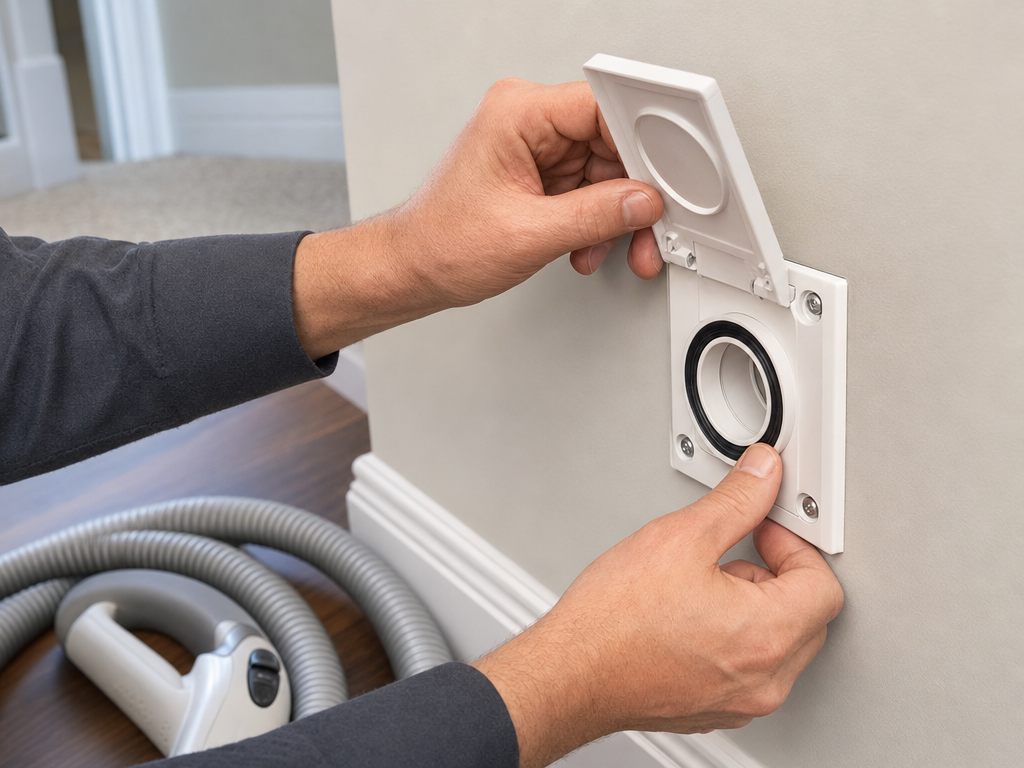
Ask for specifics: will they check the filter and bag or canister while they're there? Will they test more than one inlet to see if the problem is isolated to one branch of pipe or affects the whole system? Will you get a written note of what was found and what was done? None of these are unreasonable things to ask, and a technician who's used to doing this kind of work should be able to answer without hesitation.
Ask which one you're getting. If a fuller check isn't part of the repair, that's closer to what a central vacuum tune-up covers, and it's worth knowing the difference before you book either one.
Ask If They've Worked on Your Type of System
Central vacuum setups aren't all installed the same way, especially in homes where the system was added after the house was built rather than during construction. The piping runs, inlet locations, and accessibility can all be different from a new-build install. It's a fair question to ask whether the person coming to repair your system has worked with that kind of setup before.
In a retrofit, pipe runs sometimes travel through closets, attics, or exterior walls instead of the more direct paths used in new construction, and access points for troubleshooting a blockage can be harder to find. None of that makes the system harder to repair in principle – it just means the technician needs to understand how your particular system was routed before they can trace a problem back to its source.
If you're in The Villages, The Vac Stop's local central vacuum team works on systems in the area and can speak to what your particular setup needs.
Ask What Happens After the Repair
A repair should leave you with more than just a working system in the moment – it should leave you knowing what was actually done. Ask what parts were replaced, what was checked, and whether there's anything you should keep an eye on going forward. If a technician can't answer that clearly, it's harder to know whether the underlying problem was actually solved or just patched.
It's also worth asking what would count as a sign the same problem is coming back – weaker suction in the same area, a noise that returns, a breaker that trips again – so you know what to watch for instead of waiting until the system stops working altogether.
Questions and answers
How do I know if my central vacuum needs repair or just a tune-up?
If the system has a specific problem – no suction, won't turn on, a hose that won't retract – that's a repair. If it's running fine but hasn't been checked in a while, or things feel slightly off without a clear fault, that's closer to a tune-up. Asking the technician which one your situation calls for is a reasonable first question.
Does it matter if my central vacuum was installed in an existing home rather than during construction?
It can. Systems added after a home is built often have piping runs and inlet placements that differ from a new-build install. It's worth mentioning this to whoever is diagnosing the problem, since it can affect both what's wrong and how it gets fixed.
What should I ask before scheduling a repair visit?
Ask what the visit includes, whether they'll explain the diagnosis before starting work, and whether they've worked on your type of system or installation before. Those three questions cover most of what you need to know going in.
If your central vacuum isn't working the way it should, contact The Vac Stop to talk through what's going on before you decide what to do next.