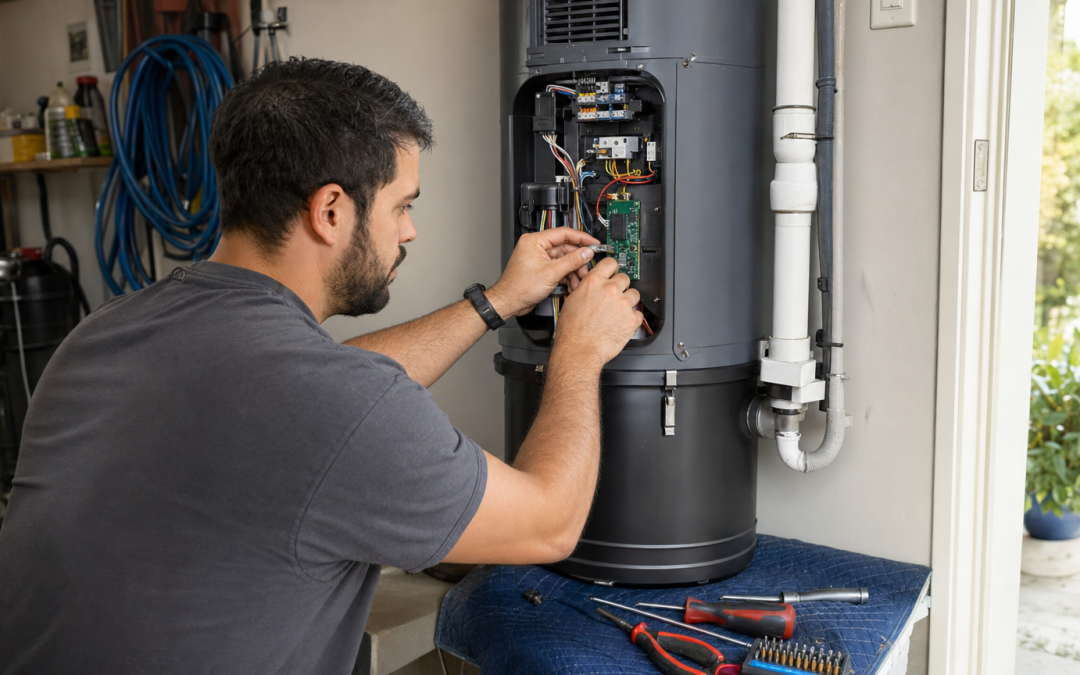
There's No Flat Rate for Central Vacuum Repair
A central vac repair can run from a minor adjustment to a cost that approaches a new system, because the price follows the specific fault rather than a standard rate card. A cracked hose fitting or a clogged inlet is a quick, inexpensive fix. A failed motor, a broken pipe run behind a wall, or damaged low-voltage wiring between the wall inlets and the power unit takes more labor and sometimes more parts, which changes the number significantly.
Anyone who quotes a price before seeing the system is guessing. The honest answer is that an accurate cost comes from a technician diagnosing what's actually wrong, then pricing that specific repair — not from a flat number pulled from an average.
What Actually Drives the Price
Most central vacuum problems fall into a handful of categories, and each one carries a different cost.
Motor issues are usually the most expensive to resolve, since the power unit does the work of the whole system. A motor that's lost suction, won't start, or shuts off mid-use may need a repair or a full unit replacement depending on what's failed inside it.
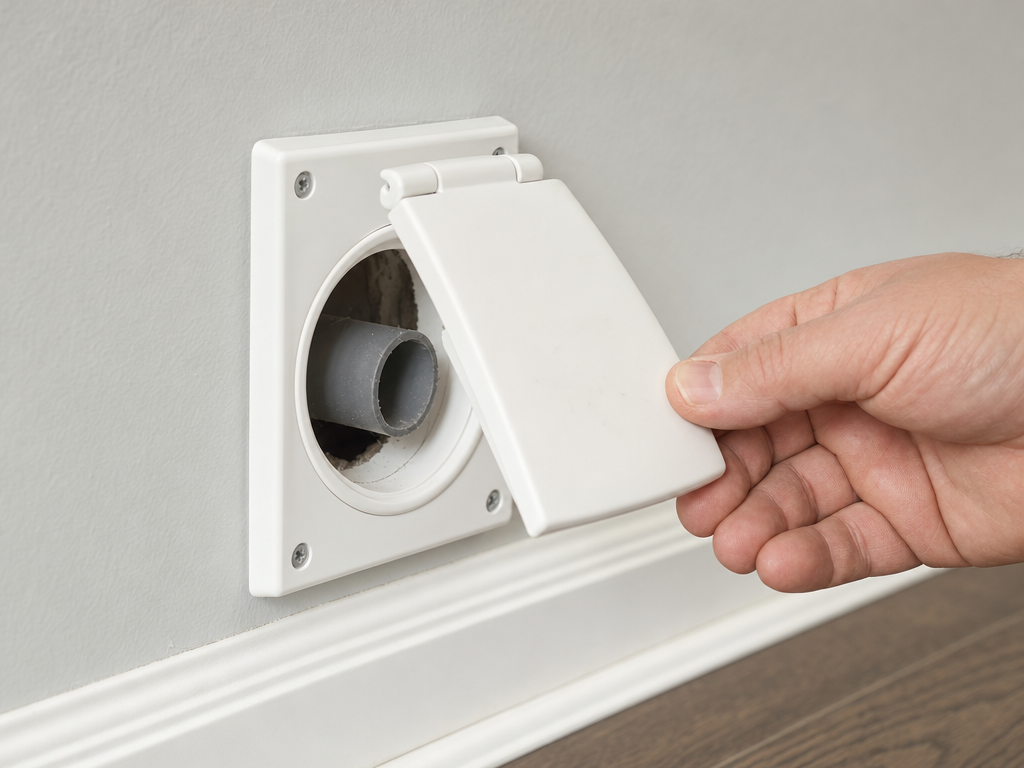
Pipe and inlet problems are often cheaper. A clog lodged in the PVC pipe network, a cracked wall inlet, or a valve that won't hold the hose securely are usually straightforward to find and fix, though access matters — a clog behind a finished wall takes longer to reach than one near an inlet.
Hose and attachment damage is the simplest category. A split hose, a worn handle switch, or a damaged power nozzle belt are typically low-cost repairs or replacement parts.
Low-voltage wiring faults sit in between. If the wire that signals the power unit to turn on is broken or disconnected somewhere in the wall, finding the break takes diagnostic time even though the fix itself is simple once located.
A dirty bag, full canister, or clogged filter isn't really a repair at all — it's maintenance, and it's worth ruling out before assuming something is broken.
A Worked Example: Two Different Causes for the Same Complaint
Picture two different homeowners who each call about the same symptom: the central vacuum has lost suction. In the first house, the technician traces the problem to a clog sitting in a short run of pipe near one inlet — a straightforward fix, usually resolved in a single visit with minimal parts. In the second house, the same complaint turns out to be a motor that's worn internally; the unit still runs, but it can no longer generate the suction it used to, and the fix means repairing or replacing the power unit itself.
Same phone call, same opening complaint, two very different jobs — and two very different costs. This is why an estimate for "no suction" or "it won't turn on" given sight-unseen isn't reliable. Those symptoms point to several possible causes, and the cause is what sets the price, not the symptom. A technician has to check the filter, test the inlets, and open the unit before the real scope of the job — and its cost — is clear.
When Repair Costs Approach Replacement
As a general rule in this trade, if a repair is going to cost close to what a new power unit would, replacement is usually the better value — compare the quoted repair cost with the price and specifications of a replacement unit before deciding. A single failed inlet or a short hose, on the other hand, is almost never worth replacing the whole system over.
Parts availability factors into this math too. Many hoses, filters, and inlet valves are generic enough to source regardless of brand or age. A proprietary power unit from a discontinued line can be harder, or sometimes impossible, to find — which pushes the decision toward replacement even when the rest of the system is otherwise fine.
The age and condition of the rest of the installation matters as well. If the pipe network and wiring are sound and only the power unit has failed, replacing just the unit is usually straightforward. If multiple parts of an older system are failing at once, that's a conversation worth having honestly rather than chasing one repair at a time.
What Happens During a Diagnostic Visit
A central vacuum diagnosis generally follows the same order, regardless of what eventually turns out to be wrong. A technician starts with the simplest, most likely explanations first — checking the bag or canister for debris, confirming the filter isn't clogged, and testing suction at a few different inlets to see whether the problem is isolated to one location or affects the whole system.
From there, the check moves to the pipe network, testing for blockages or breaks, and to the low-voltage wiring that signals the power unit to turn on when a hose is plugged in. If suction and wiring both check out but the motor still won't perform properly, the power unit itself gets opened and tested.
Working through the system in this order is what makes a quote reliable. It rules out the cheap, common causes before assuming the expensive ones, so the price that comes back reflects the actual fault rather than a guess based on the symptom alone.
Getting an Accurate Quote for Your System
The only reliable way to price a central vac repair is to have someone look at the actual system — the power unit, the pipe runs, the inlets, and the wiring — rather than estimate from a description over the phone. The Vac Stop works on central vacuum installation and service across Central Florida, including retrofits in existing homes and installations in The Villages, so a technician coming to diagnose a repair is also familiar with how these systems are typically run and wired in homes in this area.
If you're not sure whether your issue is a quick fix or something more involved, it helps to understand how a central vacuum system is laid out in the first place — the power unit, the inlet valves, and the pipe network behind the walls — since that's usually where the fault is hiding.
Questions and answers
Is it worth repairing an older central vacuum system?
Usually yes, if the fault is isolated — a bad hose, a cracked inlet, or a wiring break doesn't mean the whole system is failing. It's worth repairing an older system when the pipe network and power unit are otherwise sound and only one part has failed.
Why does my central vac have no suction?
Lost suction is most often a clog somewhere in the pipe run, a full canister or bag, a clogged filter, or a failing motor. The location of the problem — and whether it's maintenance or a repair — determines the cost to fix it.
Can a central vacuum be fixed if the brand is discontinued?
It depends on the specific part needed. Some components are generic enough to replace across brands; others, like a proprietary power unit, may be harder to source once a model is discontinued. This is worth asking about directly when getting a quote.
How long does it take to fix a central vacuum?
Repairs tied to a single, located part — a hose, an inlet, a straightforward clog — are usually completed in one visit once the fault is found. Jobs that involve locating a wiring break behind a finished wall, or sourcing a part for an older or discontinued unit, can take longer, since finding the break or the part happens before the repair itself begins.
If your central vacuum has stopped working or lost suction, the next step is to have it looked at rather than guess at the cost — visit The Vac Stop at thevacstop.com to get your system diagnosed and priced.