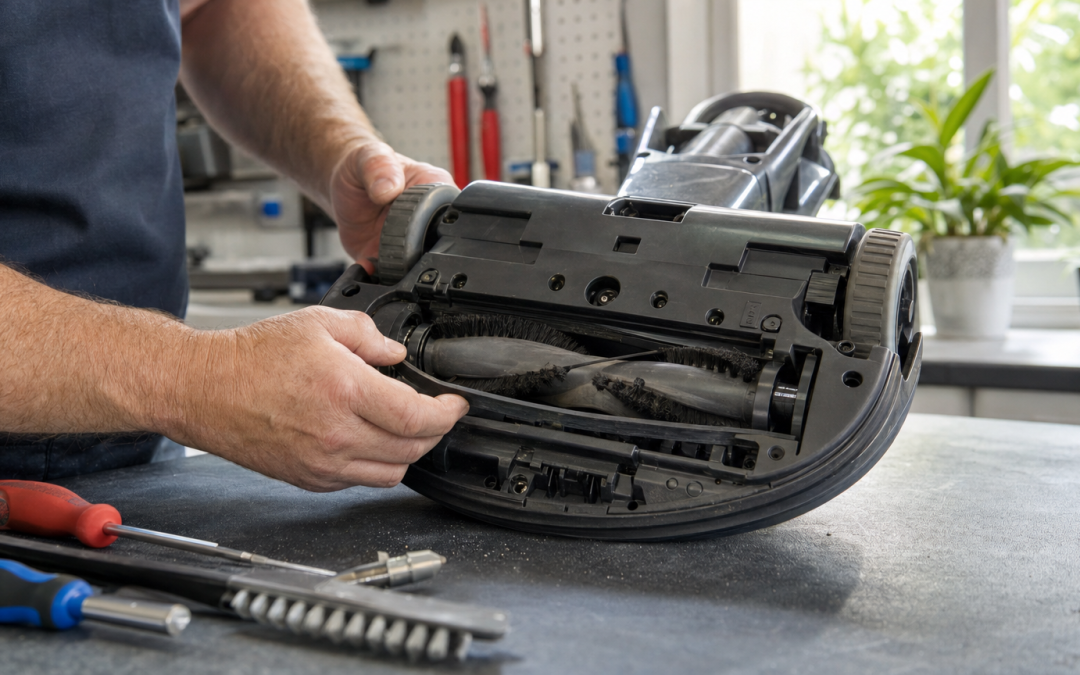
What Determines the Cost of Vacuum Repair
Vacuum repair costs vary more than people expect, because the price depends on two things: what kind of vacuum you have and what's actually broken. A clogged hose or worn belt is a quick, low-cost fix. A failed motor, a cracked housing, or a central vacuum unit that's lost suction throughout the house costs more, because the parts and labor involved are more extensive.
There's no single number that applies across the board — a repair estimate given before anyone's looked at the machine is a guess. At The Vac Stop's vacuum repair service, the first step is always a diagnosis of the actual problem, because that's what determines the real cost, not the brand or age of the vacuum on its own.
The type of vacuum matters too. A traditional corded upright or canister uses mostly standardized parts — motors, belts, brush rolls — that are easy to source and replace. A cordless stick vacuum or a robot vacuum is built differently: the battery, circuit board, and motor are often combined into a single sealed assembly, so a fault that would be a simple swap on a corded machine can mean replacing a larger, more expensive unit on a cordless one. That's part of why the same symptom — loss of suction, for example — can cost very different amounts to fix depending on what kind of vacuum it's on.
Common Repairs and Why Their Cost Varies
Belts, filters, and brush rolls are the cheapest parts to replace on almost any vacuum — they're small, standardized, and quick to install. Clogs in the hose or airway usually cost little more than the time it takes to clear them, unless something is lodged deep in the motor housing.
Motor repairs and replacements sit at the other end of the scale. A burned-out motor means more labor, a more expensive part, and sometimes a decision about whether the vacuum is still worth fixing at all. Wiring issues, broken handles, and cracked housings fall somewhere in between, depending on how much disassembly the repair requires.
Take a vacuum that's lost suction as an example. The diagnostic order usually goes from simplest to most involved: check the filter for clogging, check the hose and airway for a blockage, check whether the brush roll is spinning freely, and only then look at the motor itself. If the problem turns out to be a clogged filter or a jammed brush roll, the fix is quick and inexpensive. If none of those checks explain the loss of suction, the motor becomes the likely suspect — and that's where the price jumps, because a motor isn't a part most owners can source or install themselves, and reaching it usually means taking the vacuum apart further than a filter or belt swap requires.
What to Describe When You Call for a Price
A few details help get a more accurate estimate before the vacuum is even on the bench: the brand and model, whether the problem is constant or only happens sometimes, how old the machine is, and whether it's been repaired before. A vacuum that cuts out intermittently points to a different fault than one that's lost suction permanently, and knowing which one you're dealing with narrows the possibilities before anyone opens the housing.
For a central vacuum system, it also helps to know whether the loss of suction affects one inlet or the whole house, since that distinction points toward whether the fault is likely in the tubing, a single inlet valve, or the power unit itself.
None of that replaces an actual inspection — a vacuum rarely behaves exactly the way its owner expects once it's opened up — but it does mean the first conversation can point toward what's probably wrong rather than starting from zero.
Central Vacuum Systems Cost Differently to Repair
A central vacuum system repair isn't priced the same way as a portable upright or canister. The problem could be in the power unit, the inlet valves, the tubing run through the walls, or the low-voltage wiring that tells the system to turn on. Losing suction in one room usually points to a blockage or a damaged inlet; losing suction everywhere usually points to the power unit itself.
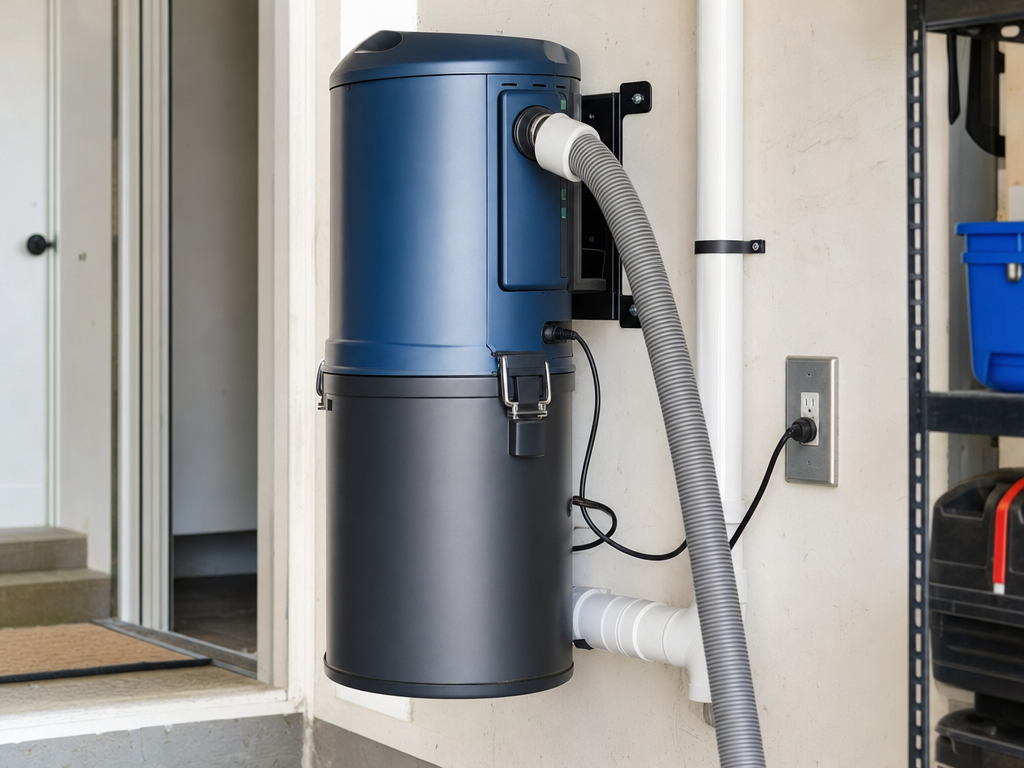
Low-voltage wiring faults are worth calling out separately, because they're easy to misread. A central vacuum that won't turn on at all from any inlet isn't necessarily a dead power unit — it can just as easily be a break somewhere in the control wire running between the inlets and the unit. That distinction matters for cost, because replacing a section of control wire is a different job than replacing the motor in the power unit, even though both faults can look identical from the inlet valve.
Because a central vacuum repair involves the system built into the house rather than a standalone appliance, locating the actual fault matters more than it does with a portable machine. If a system just needs servicing rather than a repair, a central vacuum tune-up covers routine maintenance before anything fails outright.
When Repair No Longer Makes Sense
Not every vacuum is worth repairing. If the cost of parts and labor starts approaching what a new machine would cost, or if the vacuum has already needed multiple repairs, replacement is usually the better value. That decision depends on the specific machine and the specific fault — there's no fixed age or price point where repair automatically stops making sense.
We've written a longer breakdown of how to weigh that decision at is vacuum repair worth it, covering the questions worth asking before spending money on an older machine.
Getting an Accurate Price for Your Vacuum
The only way to get a real number is to have the vacuum looked at. We serve The Villages and the surrounding Central Florida area, and the first step with any repair is identifying exactly what's wrong — then pricing it based on the actual parts and labor needed, not a guess based on the vacuum's age or brand.
If you're dealing with a vacuum that's lost suction, won't turn on, or isn't picking up the way it used to, get in touch and we'll tell you what it will actually take to fix it.
Questions and answers
Is it cheaper to repair or replace a vacuum?
It depends on the fault and the machine. A minor repair, like a belt or filter, is almost always cheaper than replacement. A major repair on an older machine can sometimes cost close to what a new vacuum would, which is worth weighing before you commit — see our breakdown on whether repair is worth it for more on how to decide.
Does a central vacuum system cost more to repair than a regular vacuum?
Repairs on a central vacuum system often take more diagnosis time than a portable vacuum, since the fault could be in the power unit, the inlet valves, or the tubing and wiring running through the house rather than in one self-contained appliance. That diagnostic step is part of what determines the final price.
Can I get a repair price over the phone without bringing the vacuum in?
A phone description can give a general sense of what's likely wrong, but an accurate price needs the vacuum examined — in person for a portable machine, or on-site for a central vacuum system, since the real fault isn't always the one the symptoms suggest.
Get in touch with The Vac Stop for a diagnosis and repair price, or bring your vacuum in if you're in The Villages or the surrounding Central Florida area.