What a Vacuum Noise Log Can Tell a Repair Technician
A vacuum noise log is simply a short written record of what a vacuum sounds like, when the sound happens, and what you were doing at the time. On its own it won't diagnose anything. But handed to a repair technician, it turns a vague complaint like "my vacuum is loud" into something they can actually work from: a pattern.
Most people call about a noisy vacuum only after they've already forgotten the details that matter most. Did the sound start suddenly or build over weeks? Does it happen only on carpet, or on hard floors too? Does it stop when you release the trigger, or does it keep going? A technician asking these questions on the phone is trying to reconstruct a log you could have kept yourself — and a few days of notes, or even one detailed observation, gives them a real starting point instead of a guess.
What to Write Down Before You Call
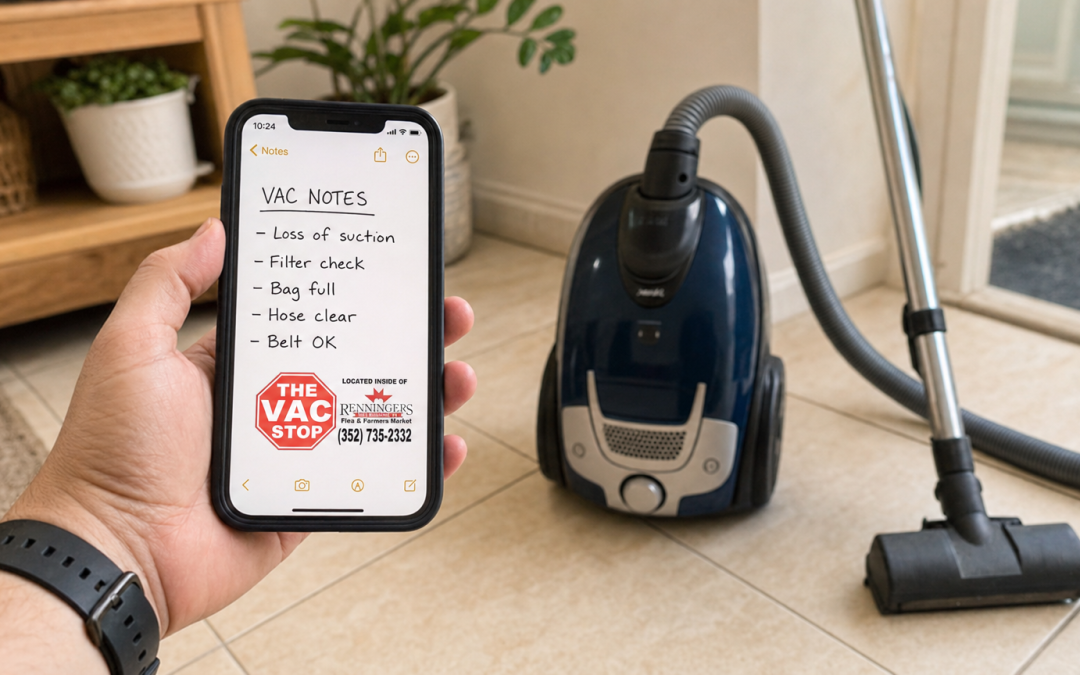
You don't need special tools or technical knowledge to keep a useful log. A phone note or a scrap of paper by the vacuum is enough. The goal is to capture the pattern, not the cause.

Useful entries typically include: the date and approximate time; what you were doing when you noticed it (starting the vacuum, mid-clean, emptying the canister, retracting the hose); whether the sound was constant or came and went; whether it changed with suction setting or attachment; and whether anything else accompanied it, such as a smell, a vibration, or reduced suction. If the sound only happens with a specific tool attached, note that too — it narrows things considerably.
For central vacuum systems specifically, it also helps to note which inlet or room you were using, since sound that only occurs at one inlet points somewhere different than sound that happens system-wide.
What Different Sound Patterns Usually Suggest
In general terms, a high-pitched whine or squeal often points toward something to do with motor bearings or belt friction, while a rattling or clicking noise is more often a sign of debris or a loose part moving inside the airflow path. A grinding sound tends to suggest something is contacting a moving part that shouldn't be. A sudden change in pitch partway through a cleaning session — rather than a steady constant tone — is itself a meaningful detail, because it tells a technician the noise is load-related rather than constant.
These are general patterns any experienced technician would recognize, not a diagnosis, and they're not a substitute for an actual inspection. The value of the log isn't that it tells you what's wrong — it's that it tells the technician where to start looking and whether the problem is getting worse, staying the same, or changing in nature.
A Worked Example: Tracking an Intermittent Rattle
Here's how this kind of log plays out in practice, using a common type of complaint as an illustration rather than a specific customer account.
Say a rattling sound shows up only when the vacuum is used on carpet, not on tile, and only after it's been running for a few minutes. A one-line log entry each time it happens might read: "Monday, 7:40am, upright on carpet, rattle started about 3 minutes in, stopped when I lifted the vacuum off the floor." A second entry two days later: "Wednesday, similar timing, rattle present, suction seemed normal." A third: "Friday, rattle present from the start, also noticed a faint burning smell."
Taken together, those three notes tell a technician several things before they even see the vacuum: the noise is floor-type specific, it's progressing from delayed-onset to immediate, and it's now paired with a smell — which, as covered below, changes the urgency. None of that comes from one phone call describing "a rattling sound." It comes from three short, dated entries.
A Simple Noise Log Checklist You Can Copy
If you want a format to start from, a short, copyable version looks like this — jot each line in a notes app or on paper:
– Date and approximate time
– What you were doing (starting up, mid-clean, emptying canister, retracting hose)
– Floor type or attachment in use
– Whether the sound was constant, intermittent, or load-related (started partway through)
– A plain description of the sound (whine, rattle, grind, hiss, click)
– Which inlet or room, if it's a central vacuum
– Anything else noticed at the same time — smell, vibration, reduced suction
You don't need every field filled in every time. Even two or three entries with partial detail are more useful to a technician than a single description given from memory.
When a Burning Smell Changes the Picture
If an unusual sound shows up alongside a burning smell, that combination deserves more urgency than noise alone. We've written a separate guide on that vacuum burning smell specifically, covering how to tell different kinds of burning smells apart and what to do first. If you're noting both a noise and a smell in your log, mention that combination clearly when you call — it changes how the conversation should go.
How a Noise Log Helps When You Call The Vac Stop
Bring your noise log when you ask about portable vacuum repair at The Vac Stop. Even a short note can help start the conversation with what happened. Share the model, the surface you were cleaning, which attachment you used, and whether the sound stopped when you switched the vacuum off. If you noticed an unusual smell or another change at the same time, include that in the note.
Questions and answers
What kind of noise does a vacuum leak make?
An air leak — from a loose hose connection, a cracked fitting, or a gap in a seal — typically produces a higher, hissing or whistling tone rather than a mechanical rattle or grind, and it's often accompanied by reduced suction. Noting whether the sound is more of a hiss than a grind is a useful detail for a noise log.
What does a bad vacuum motor sound like?
Motor-related noise is commonly described as a whine, squeal, or grinding sound, and it's usually present whenever the vacuum is running rather than tied to a specific attachment or floor type. If the sound is constant across every setting and surface, that's worth noting separately from a sound that only appears under certain conditions.
If your vacuum is making an unfamiliar sound, write down what you noticed and contact The Vac Stop about portable vacuum repair.